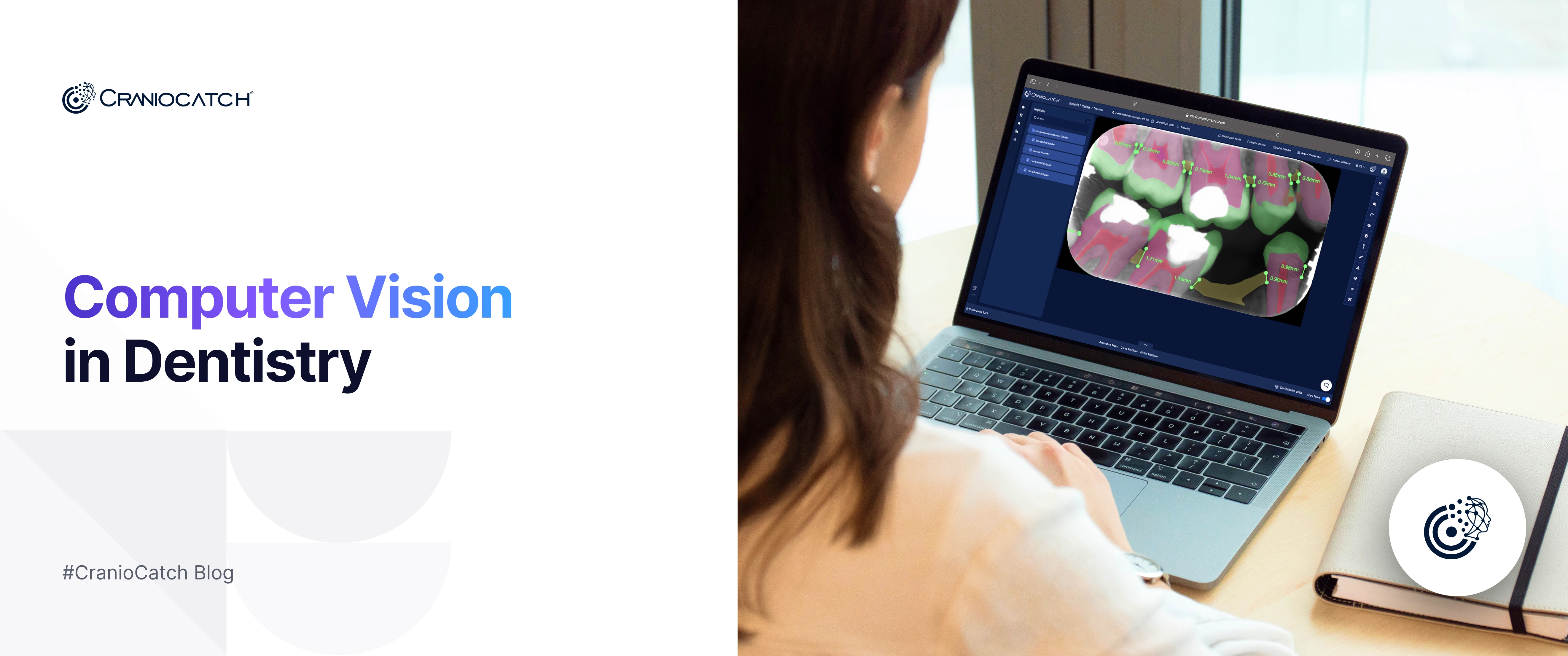
Computer Vision in Dentistry
Foundations of Computer Vision and AI in Dental Imaging
Artificial intelligence (AI) in medicine integrates computer vision with dental imaging to automatically analyze radiographs, CBCT scans, and intraoral images using machine learning and deep learning methods like neural networks to enhance diagnostic precision and reduce human error in clinical settings.
CNN-based models interpret complex image patterns for tasks such as detecting caries, anatomical segmentation, and classification of dental anomalies across specialties like orthodontics and surgery, outperforming traditional manual interpretation in speed and consistency.
In AI-powered dentistry, machine learning empowers systems to learn from large datasets of annotated dental images, improving detection rates for periodontal disease and cavities while enabling predictive analytics for treatment planning and prognosis.
Deep learning, a specialized subset of machine learning, excels at automatically extracting features from raw image data—minimizing preprocessing and enabling advanced applications such as segmentation of 3D dental structures and personalized diagnostic support.
Importance of Computer Vision in Dental Care
The importance of computer vision in dental care lies in its ability to significantly enhance early detection of dental disease such as tooth decay, periodontal issues, and oral anomalies from imaging data, enabling dentists and clinicians to diagnose conditions faster and with higher accuracy than manual review alone.
This technology supports dental practitioners by reducing human error and workload, improving workflow efficiency, and allowing more time for direct tooth care and personalized patient strategies. Additionally, AI-driven image interpretation helps standardize diagnostics across practices, leading to more consistent care and better long-term oral health outcomes.
System Design and Technical Architecture
Computer Vision System Design
Effective computer vision system design in dentistry combines robust data pipelines, AI models, and imaging hardware to support accurate clinical decisions. In practice, architectures are commonly categorized as:
- 2D vision systems – analyze dental X-rays and intraoral images using CNN-based models for tasks like caries detection and classification, offering fast deployment and lower computational cost .
- 3D computer vision systems – process CBCT and 3D scans to enable volumetric analysis, anatomical segmentation, and precise treatment planning, especially in implantology and orthodontics .
Together, these architectures form the technical backbone of scalable, AI-driven dental imaging platforms that improve diagnostic accuracy and clinical efficiency .
Core Computer Vision Techniques
Core computer vision techniques form the foundation of how AI systems interpret visual data, and they include:
- Object detection – Locates and classifies objects within an image, enabling systems to identify regions of interest such as anatomical landmarks in dental scans.
- Segmentation – Partitions an image into meaningful regions (e.g., separating teeth from gums) to enable pixel-level analysis, with methods ranging from thresholding and clustering to deep learning models
- Pattern recognition – Identifies patterns and structures in image data, supporting classification and anomaly detection in dental imaging by learning feature representations.
- Image clustering – Groups similar pixels or regions to assist in unsupervised segmentation and region analysis.
- Feature extraction – Detects distinctive visual features (e.g., edges, corners, gradients) used as inputs for higher-level tasks like detection or classification.
Dental Image Acquisition Technologies
Dental imaging relies on diverse technologies to capture visual data used in diagnosis and treatment planning:
- X-ray imaging – Traditional and digital dental radiography uses controlled X-ray bursts to visualize hidden tooth structures, cavities, bone loss, and other issues in 2D images like periapical and panoramic radiographs. These images help dentists assess oral health and guide treatment decisions.
- CT scans – Medical computed tomography (CT) produces detailed cross-sectional images for complex maxillofacial assessments, though it’s less common in routine dental practice due to higher radiation doses.
- CBCT (Cone-Beam CT) – A specialized dental imaging modality that rotates a cone-shaped X-ray source around the patient to generate high-resolution 3D views of teeth, bone, and surrounding structures with lower radiation than conventional CT, essential for implant planning, orthodontics, and surgical evaluation.
- Intraoral scans – Digital scanning devices capture highly detailed surface images of teeth and soft tissues directly inside the mouth, improving diagnostic documentation and enabling digital workflows for restorations and orthodontic planning.
Dental Image Types
Dental imaging includes several standard image types used by dentists to assess oral health:
- Panoramic (Pano) – A wide-view 2D image of the entire mouth, jaws, and teeth, capturing general structure and development in a single scan ideal for overall assessment and planning.
- Bitewing – Intraoral X-ray showing upper and lower teeth together, especially effective for detecting interproximal cavities and early decay between adjacent teeth.
- Periapical (PA) – Focuses closely on one or two teeth, capturing the full tooth from crown to root and surrounding bone to identify root issues, abscesses, or localized pathology.
Dental Datasets and Image Repositories
Dental datasets and dental image databases are vital resources for training AI models in computer vision dentistry, offering annotated radiographs, CBCT scans, intraoral photos, and spectral images that support diagnostic research and model development. The Teeth or Dental image dataset on Mendeley provides thousands of annotated tooth images useful for machine learning tasks in dental assessment.
Teeth and Tooth-Level Analysis
Deep learning techniques enable precise tooth and teeth detection by automatically identifying and localizing individual teeth in dental images such as panoramic, bitewing, and periapical radiographs. Using convolutional neural networks, these systems support automated tooth numbering and structural analysis, helping dentists and clinicians improve diagnostic consistency and reduce manual workload .
For tooth decay and cavity detection, deep learning models analyze subtle visual patterns in dental images to identify early-stage carious lesions with high sensitivity, supporting earlier intervention and more accurate treatment planning. This tooth-level analysis strengthens clinical decision-making while enhancing the overall efficiency and reliability of AI-assisted dental care .
Disease-Oriented Image Interpretation
Deep learning–based computer vision enables disease-focused analysis of dental images by identifying visual patterns linked to dental disease, including periodontal disease, periodontitis, and periodontal bone loss, supporting earlier and more objective diagnosis from radiographs and CBCT data .
It also aids detection of dental plaque, dental abscess, endodontic lesions, and periodontal lesions by segmenting infected regions and assessing tissue changes with high sensitivity .
Advanced models further contribute to oral cancer detection through analysis of intraoral images and radiographs, while bone pattern evaluation helps identify systemic conditions such as osteoporosis reflected in jawbone density changes .





















 Contact Us